Clarify the story
Make each project easier to scan, understand, and explore.
Personal project · Design and development · 2026
A considered process for turning a portfolio refresh into a clear, working experience.
Overview
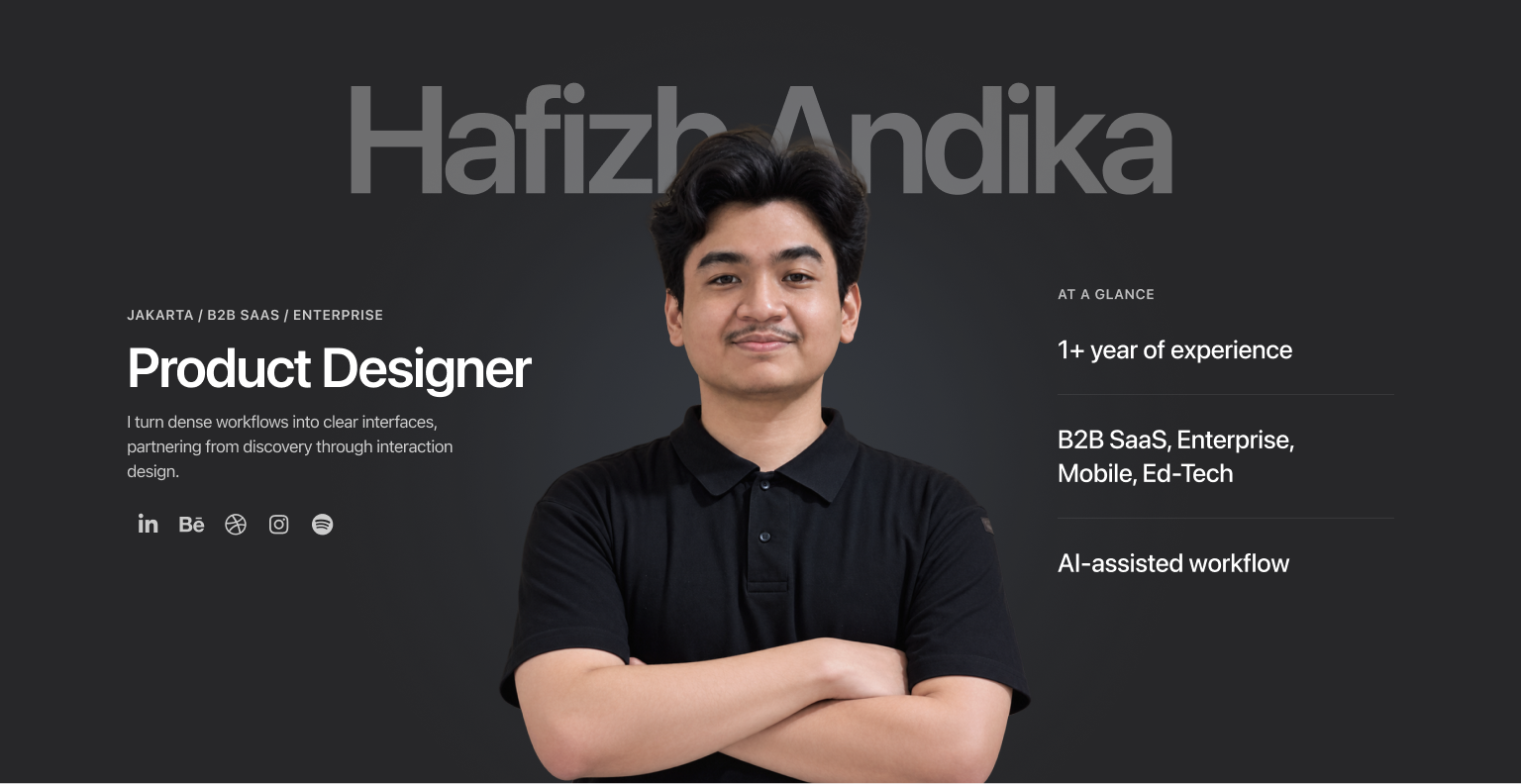
I began by auditing my existing portfolio and listing the changes that would make the work easier to understand. That gave the project a practical starting point: improve how the portfolio tells each story, how the pages feel related, and how visitors move between projects.
From there, I researched other designers’ portfolios and social content, explored possible directions with Claude, ChatGPT, and Gemini, then chose a direction to carry into the build.
Make each project easier to scan, understand, and explore.
Use shared patterns so every case study feels part of one portfolio.
Give visitors a clear path from the homepage into each project.
Approach
I studied how other designers structure their portfolios and present their work, then used Claude, ChatGPT, and Gemini to explore possible directions. Comparing those ideas helped me choose an approach that better supports my projects and the way I want to tell their stories. I captured that direction in design.md, with practical guidance for typography, color, spacing, and reusable components to carry into the build.
Design rationale
A design direction only stays consistent when it is clear enough to use.
The shared reference keeps decisions close to the work. It gives Codex and me a common guide for components, typography, spacing, and surface colors while each project still gets the content and imagery it needs.
Reusable components make project pages feel connected and familiar.
Each case study can explain its own challenge and decisions while keeping a consistent reading rhythm.
Codex works in the GitHub-connected project with design.md as the implementation guide.
Workflow
The work moves from understanding what needs to change to documenting and implementing the chosen direction. Vercel is the selected publishing destination for the final step.
Outcome
The process brings research, design decisions, and implementation into one connected workflow. A documented visual direction supports a more coherent portfolio, while project-specific storytelling keeps each case study focused on its own work.
The portfolio is being built with Codex and GitHub. Vercel is the chosen destination for publishing once the design work is complete.